


The definition of implants is simple but important: dental implants are artificial tooth roots placed in the jaw to support replacement teeth. Understanding the correct definition of implants helps patients pick the right treatment and set realistic expectations for recovery and outcomes.
What is the definition of implants?
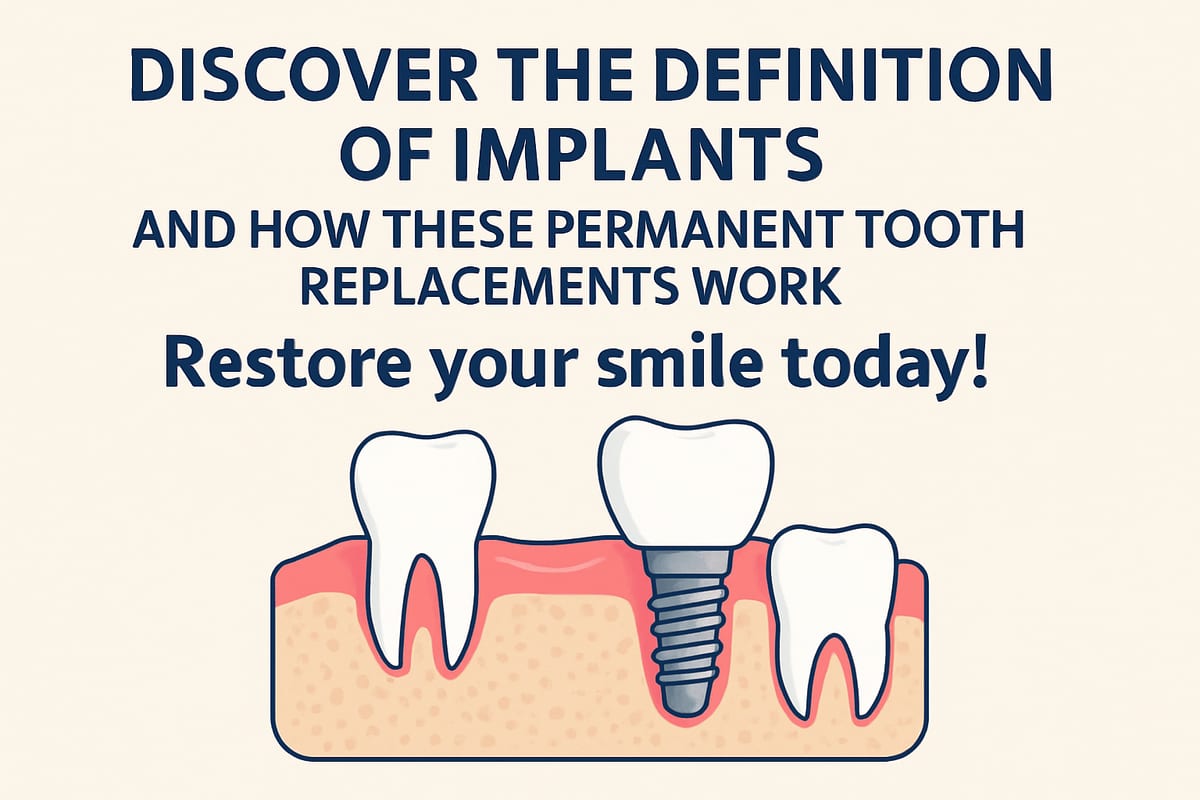
The definition of implants is an engineered root made of biocompatible material that is surgically placed into the jawbone to hold a replacement tooth or teeth. Implants do more than replace visible teeth; they replace the tooth root, which supports bone health and gives long-term stability.
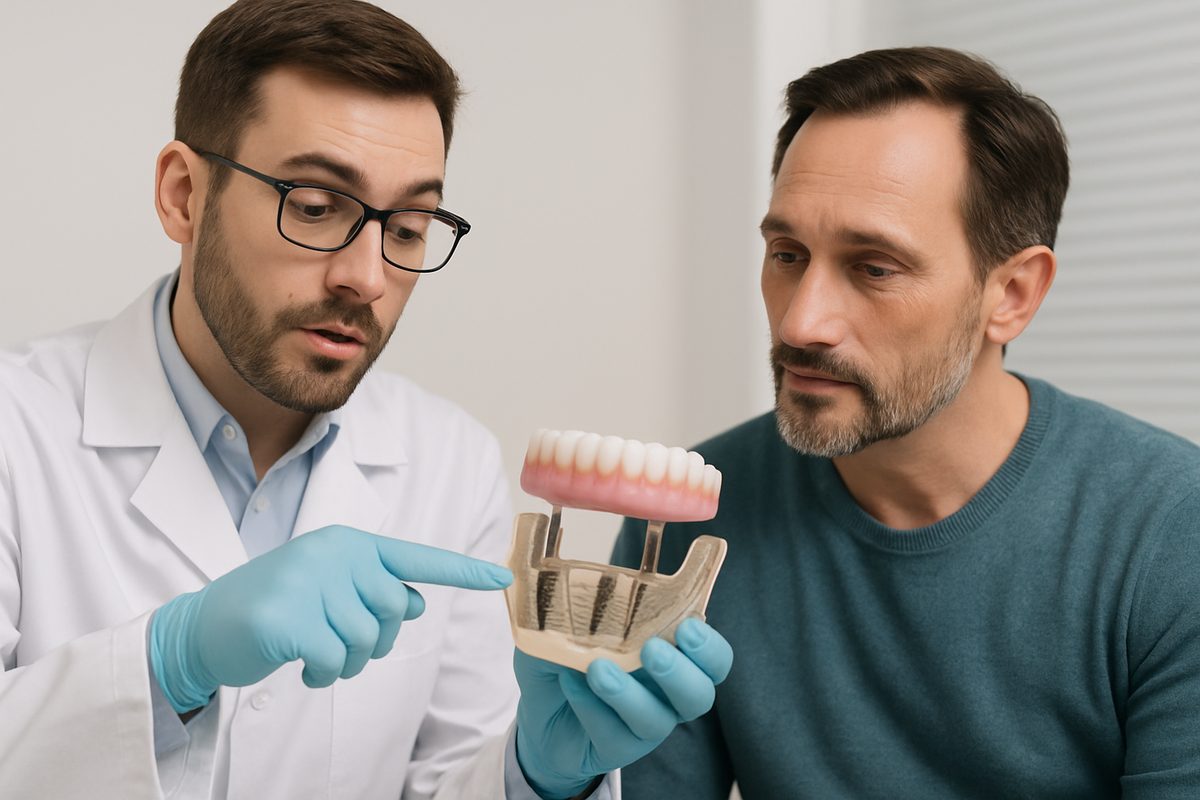
Most implants have three main parts:
- Implant (fixture) — the screw-like piece placed into the bone.
- Abutment — the connector that links the implant to the prosthetic tooth.
- Crown or prosthesis — the visible tooth replacement (single crown, bridge, or full-arch denture).
Common materials include titanium and zirconia. These materials bond well with bone and resist corrosion. Because implants act like roots, they preserve jawbone and give chewing strength that most removable dentures cannot match.
Types of dental implants and how they differ
Single-tooth implant
Used when one tooth is missing. A single implant supports one crown. Benefits over a bridge include preserving neighboring teeth (no shaving down adjacent teeth) and better bone preservation.
Implant-supported bridge
Used when several teeth in a row are missing. Two or more implants can support a bridge, so fewer implants are needed than replacing each tooth individually. This lowers cost and surgery while restoring function.
Full-arch solutions (All-on-4 / All-on-X)
Designed for patients missing most or all teeth in an arch. Four or more implants support a full fixed prosthesis. Pros: faster rehab, fewer implants, strong chewing ability. Cons: higher upfront cost and more complex planning; may not suit patients with severe bone loss without grafting.
Who is a good candidate and what affects success
Good candidates generally have adequate bone volume, healthy gums, and controlled medical conditions. Key factors that affect success include:
- Bone volume and density — enough bone is needed to hold the implant.
- Gum health — untreated gum disease raises failure risk.
- Smoking — reduces healing and increases complications.
- Chronic conditions — uncontrolled diabetes or immune disorders can affect healing.
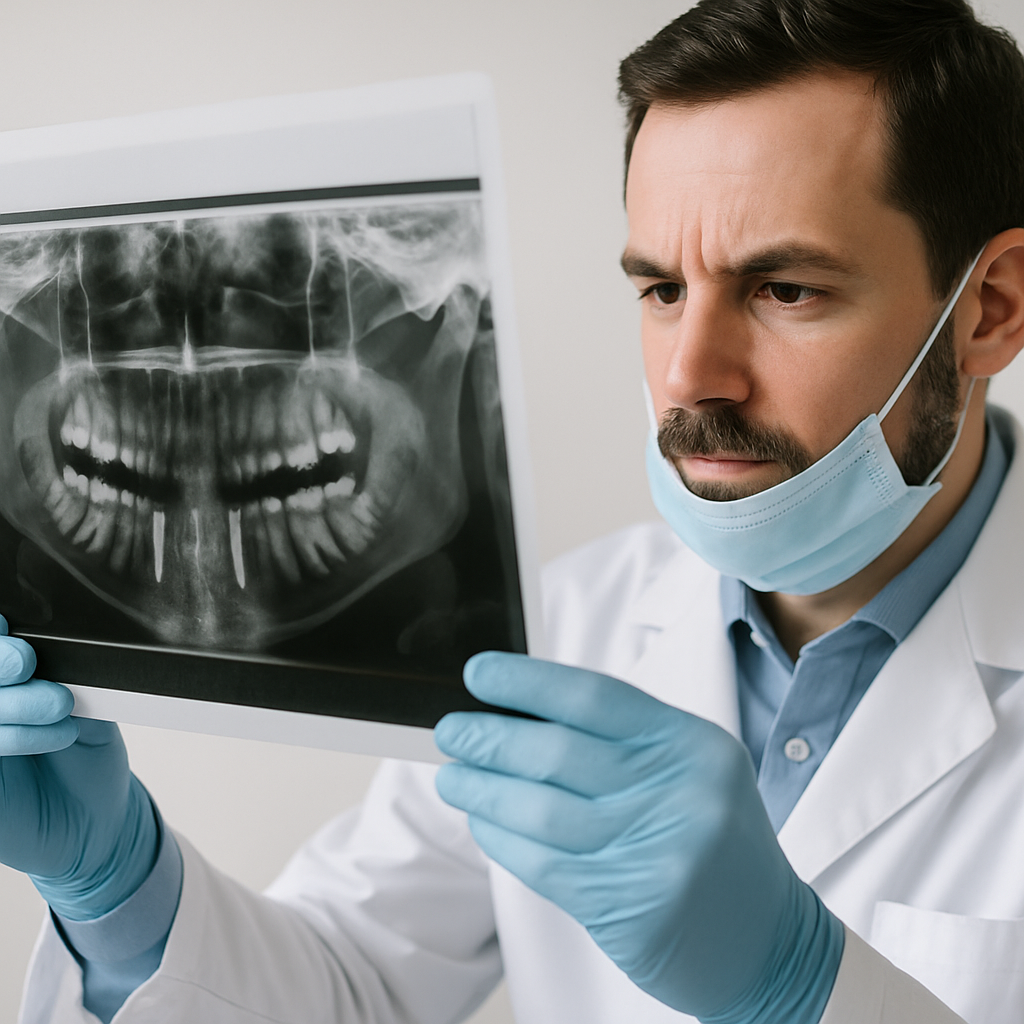
If you’re not a candidate now, options include bone grafts or sinus lifts to rebuild bone, and temporary prosthetics (like dentures) while you prepare for implants. Typical timeline: consultation and 3D imaging, treatment planning, implant surgery, a healing period for bone to integrate (often several months), then placement of the final restoration.
What to expect and next steps if you want implants
Procedure overview: after an exam and 3D imaging, the implant is placed into the bone. You may get a temporary tooth the same day in some cases. Healing usually takes weeks to months as bone bonds to the implant. Recovery: mild to moderate discomfort for a few days, managed with pain meds and rest. Risks include infection, implant failure, nerve or sinus issues (rare). Costs vary widely depending on type and complexity; expect higher costs for full-arch work versus a single tooth.
In our office, we evaluate candidates with imaging and a health review, explain options, and create a step-by-step treatment plan tailored to your needs. We focus on factual assessment and realistic timelines.
Next step: schedule a consult or call to learn more about the “definition of implants” applied to your case and to get a personalized plan for treatment.