

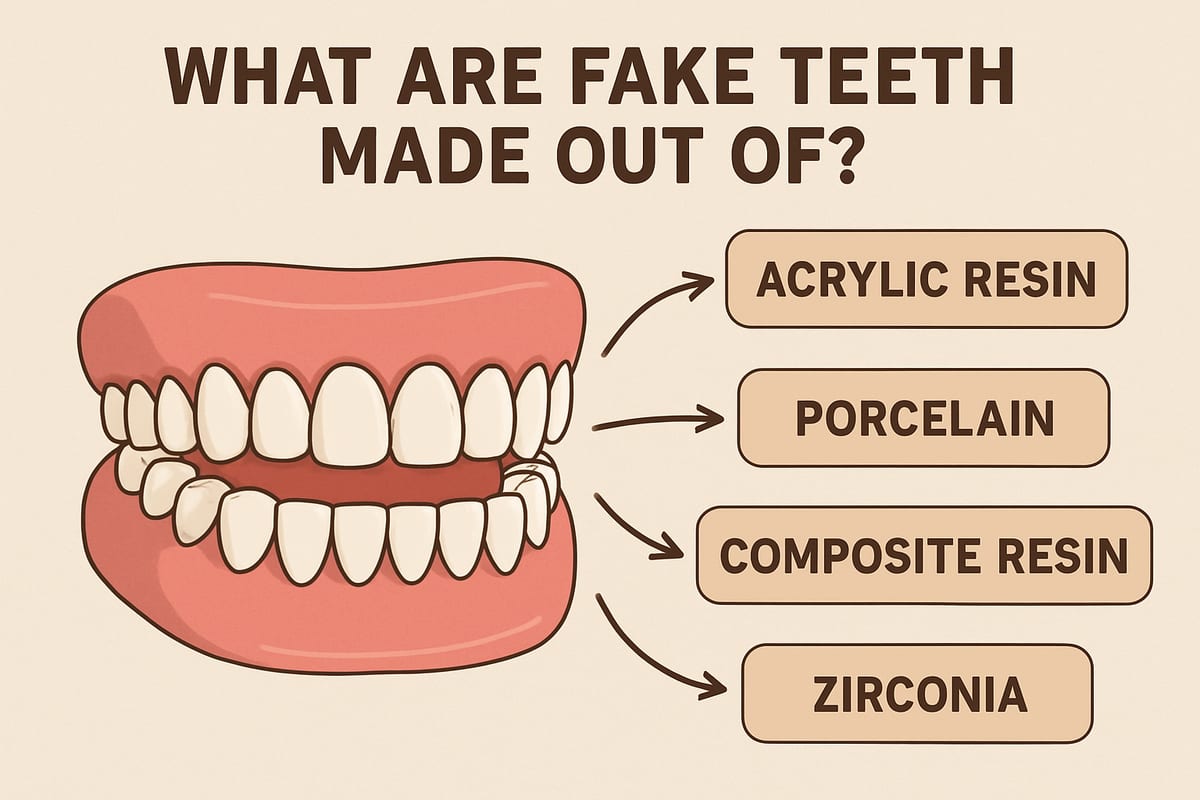
If you’ve ever wondered what are fake teeth made out of, the short answer is: a mix of ceramics, plastics, and metals. Different dental devices use different materials depending on the job — some focus on looks, others on strength or cost. This guide gives quick facts about the common materials, how they’re used, the pros and cons, and simple tips for choosing the right option.
Read on for clear, practical info so you can talk with your dentist about the best material for crowns, bridges, dentures, implants, veneers, or temporary teeth.
Common Materials Used For Fake Teeth
Porcelain — A ceramic that looks most like natural tooth enamel. Porcelain resists stains well and provides the best cosmetic match for front teeth. It’s often used for crowns, veneers, and some denture teeth.
Acrylic (PMMA) — A lightweight plastic used for denture bases and many denture teeth. Acrylic is affordable, easy to repair, and lighter in the mouth than some ceramics. It can wear faster and pick up stains over time.
Composite resin — A tooth-colored material used for veneers and temporary restorations. It is less expensive than porcelain but can wear and stain sooner. Dentists often use composite for short-term fixes or when cost is a concern.
Zirconia — A very strong ceramic used for crowns and implant crowns. Zirconia combines high strength with good aesthetics, making it a popular choice where durability matters, such as back teeth or implant restorations.
Metal alloys & titanium — Metals are used where strength and support are essential. Titanium is the standard for implant posts because it bonds well with bone. Metal alloys can form the framework for metal-based crowns or denture bars.
How Different Types Of Fake Teeth Use These Materials
Dentures
Most full and partial dentures use an acrylic (PMMA) base that rests on the gums. Denture teeth can be acrylic or porcelain:
- Acrylic denture teeth: lighter, easier to adjust, and less likely to break the denture base. Good for most patients.
- Porcelain denture teeth: harder and more stain-resistant, but heavier and more likely to wear down opposing natural teeth.
Choice depends on cost, bite force, and patient preference for feel and appearance.
Crowns & Bridges
Crowns and bridges may be:
- Porcelain-fused-to-metal (PFM): A metal core covered with porcelain. Good strength and decent aesthetics.
- All-ceramic: Porcelain or glass-ceramic crowns that look very natural, best for front teeth.
- Zirconia: High strength and growing in popularity for both front and back teeth.
Dental Implants
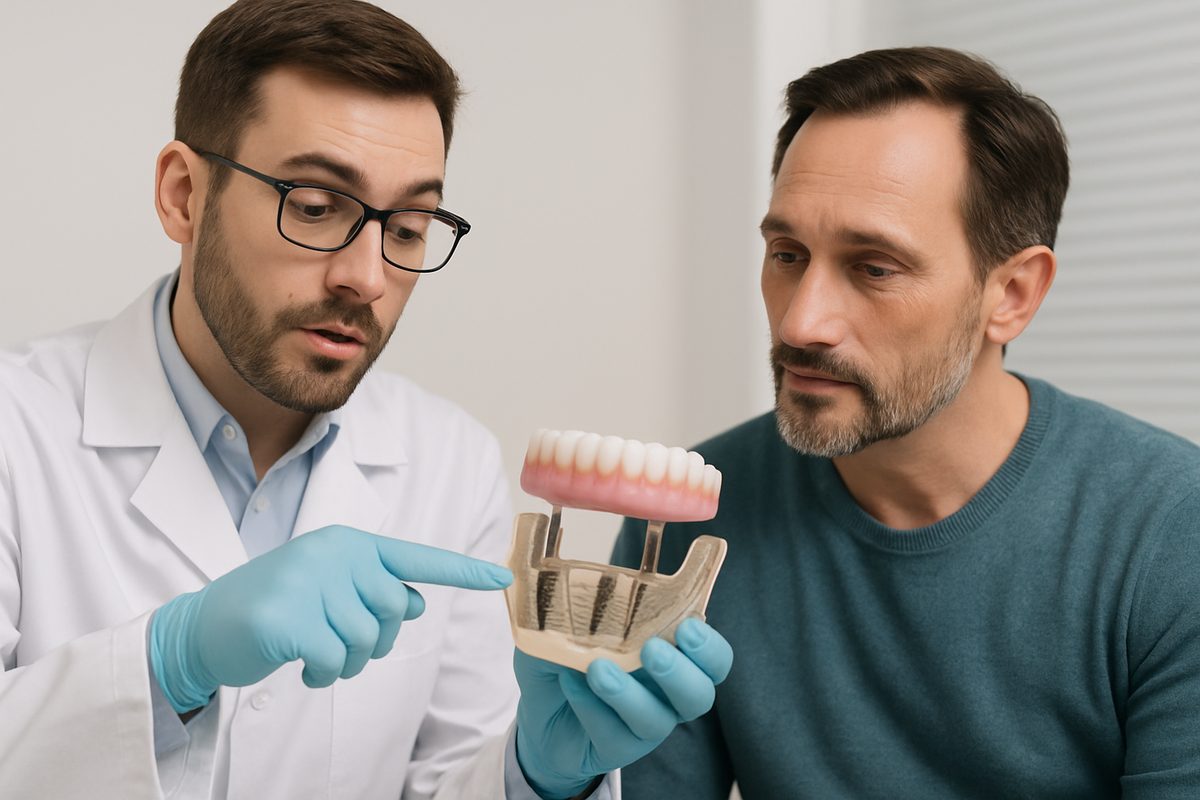
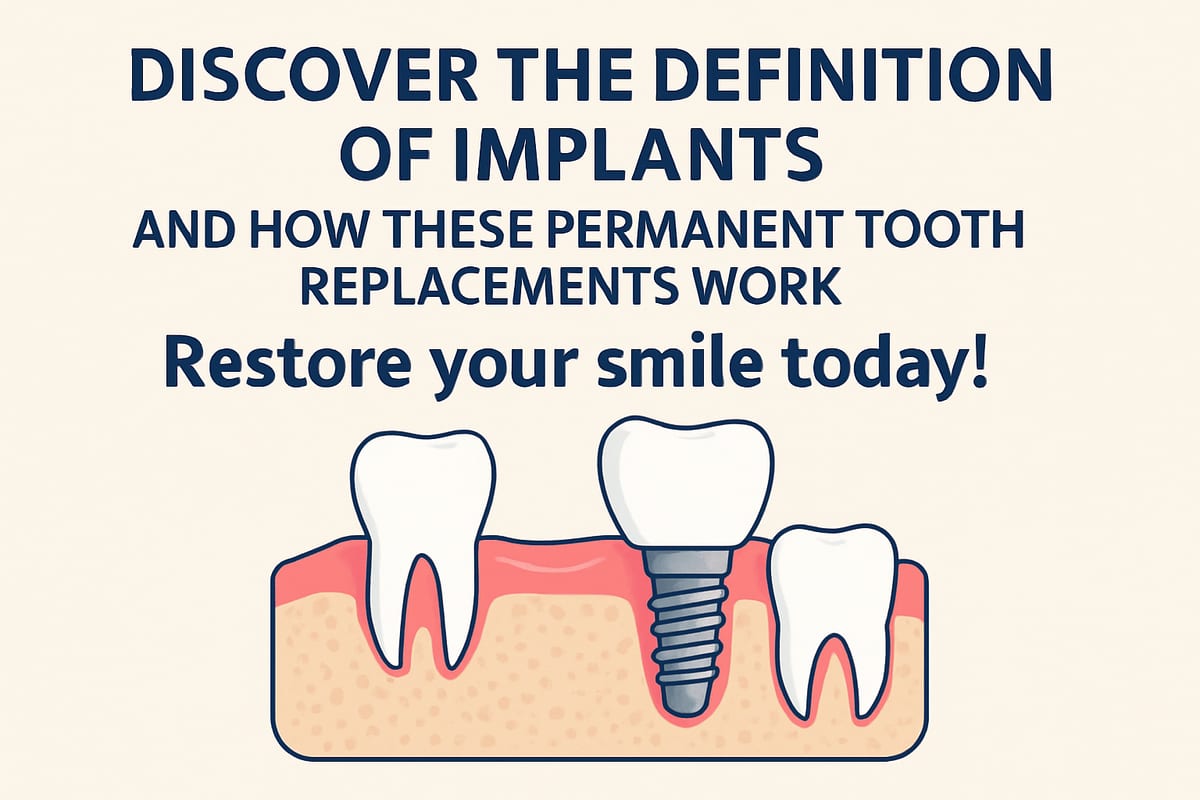
Implant posts are typically titanium because titanium fuses to bone (osseointegration). The visible crown attached to the implant is usually ceramic — porcelain or zirconia — chosen for appearance and strength. Some systems use a zirconia implant post for patients with metal sensitivities.
Veneers & Temporaries
Veneers can be thin porcelain shells for a long-lasting, stain-resistant finish, or composite resin veneers that are cheaper and quicker to place. Temporary crowns and bridges are often made from acrylic or composite while a permanent restoration is made in the lab.
What Affects Which Material Is Best?
A few key factors guide the choice:
- Aesthetics vs. strength: Porcelain and zirconia look most natural. Zirconia is stronger than porcelain. Composite is less durable but costs less.
- Cost and lifespan: Porcelain and zirconia last longer but cost more. Acrylic is inexpensive but may need replacement sooner.
- Allergies and sensitivities: Some people react to certain metals or acrylics. Tell your dentist about any known allergies.
- Maintenance and repairs: Acrylic is easy to repair. Porcelain and zirconia may need lab work for fixes.
How To Choose Safe Fake Teeth
To make a safe choice, ask your dentist specific questions:
- What material will you use and why?
- How long can I expect this to last?
- What are the risks or maintenance needs?
- Do you have photos or samples of this material?
If you have complex needs — heavy bite, significant bone loss, or metal allergies — consider seeing a prosthodontist or implant surgeon who focuses on full-mouth restorations. If you’re still asking what are fake teeth made out of, bring that exact question to your appointment and request material samples or pictures. Seeing and touching samples helps you judge color, weight, and texture.
Ready to explore options? Schedule a consult to review materials, get personalized recommendations, and see samples so you can choose fake teeth that meet your needs for looks, comfort, and long-term value.